The Avars experienced a comeback in the later seventh century after the low point of the 630s when parts of the khaganate had broken away in the West and East.
When Samo of the Slavs died in 660, his realm splintered between his squabbling sons, and so the Avars were able to subjugate each small polity in turn. Within a few years, the khagan had once again secured the entirety of the Carpathian Basin.
At the same time, Kubrat of the Bulgars died in 665, and before his eldest son had a chance to settle into the saddle, the Turkic Khazars attacked them from the steppes to the East. The khagan was too weak to get into a three-way war, but the chaos in the region worked to his advantage, as it destroyed the power of his neighbouring rival.
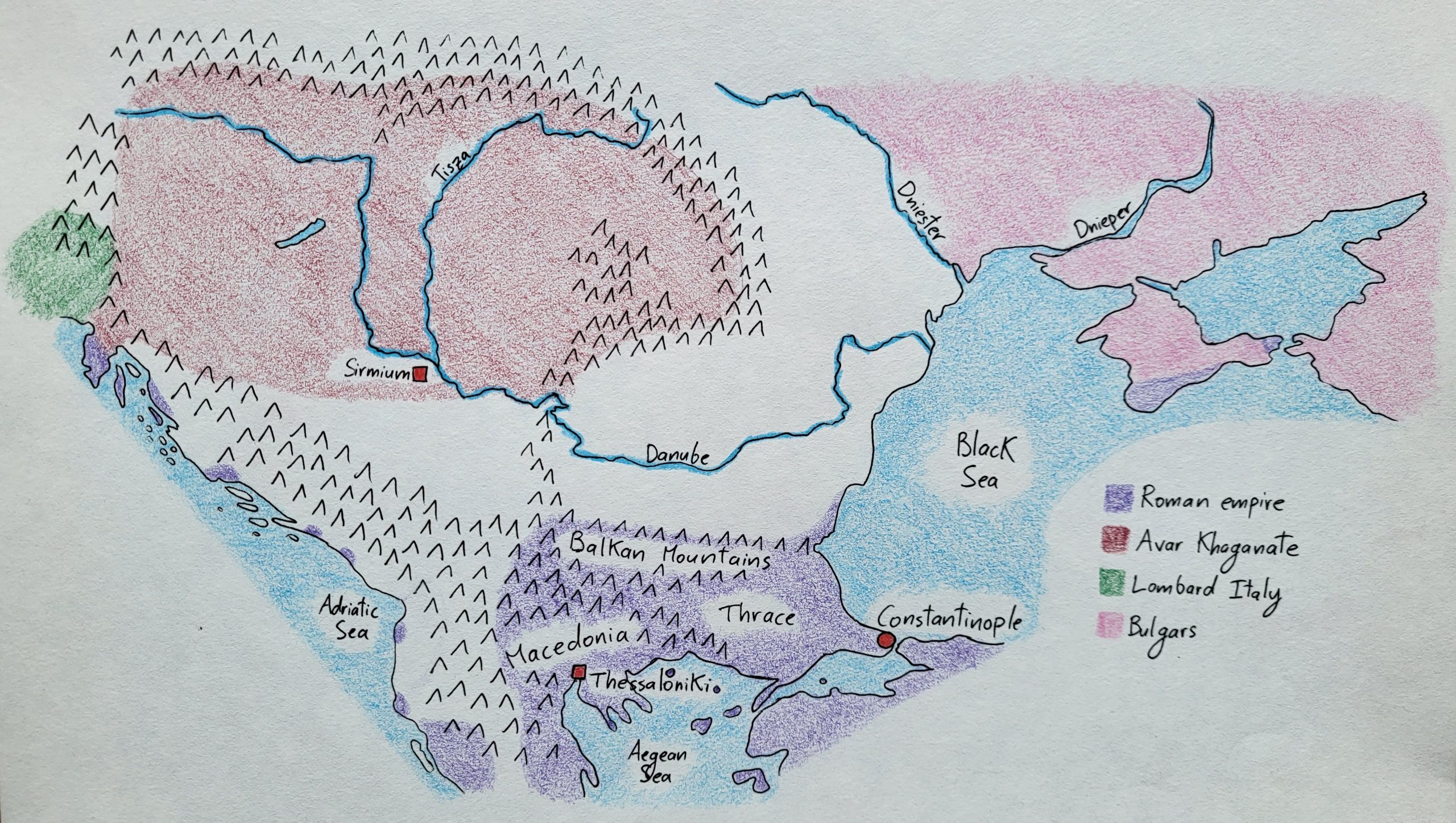
Note also that the Roman empire had made efforts to reintegrate parts of the Balkans which it had lost during the joint Avar and Slavic invasions of the early seventh century.
The empire only had enough resources to undertake campaigns in Greece and Macedonia, but it nevertheless made significant progress. In the 650s and 660s, the Roman emperor brought local Slavic leaders into his orbit as allied rulers and directly reintegrated some former provincials into the state administration. The hinterlands around Thessaloniki and up to the Balkan Mountains were once again under imperial control.
Leave a Reply